
If your CTO is leaving, your lead is overloaded or a milestone needs senior ownership, the title matters less than the decisions it must cover. Start by choosing the mandate, then the format.
Short answer. In everyday use, interim usually describes temporary cover and fractional describes part-time work. Separate purpose from commitment: interim leadership ends at an agreed transition event; fractional participation uses part of a CTO's working capacity. The two can combine. Full-time cover may be permanent or interim; a capable current lead may need support rather than replacement.
Decision rule—editorial heuristic, not a validated test. Check authority first: more CTO hours cannot supply budget or product authority the sponsor has not delegated. Then check timing. Unowned decisions arising throughout the day point to fuller coverage, permanent or interim. Decisions that can wait for scheduled windows, with a capable lead running daily delivery and backup agreed, may fit a fractional remit. If the CTO is leaving, name who holds each decision until a successor accepts it.
Sponsor, engineering lead, product counterpart and finance can use the table and template below to judge the same options. To discuss the result with a person, bring your completed remit to a conversation with the Grand Rounds curator.
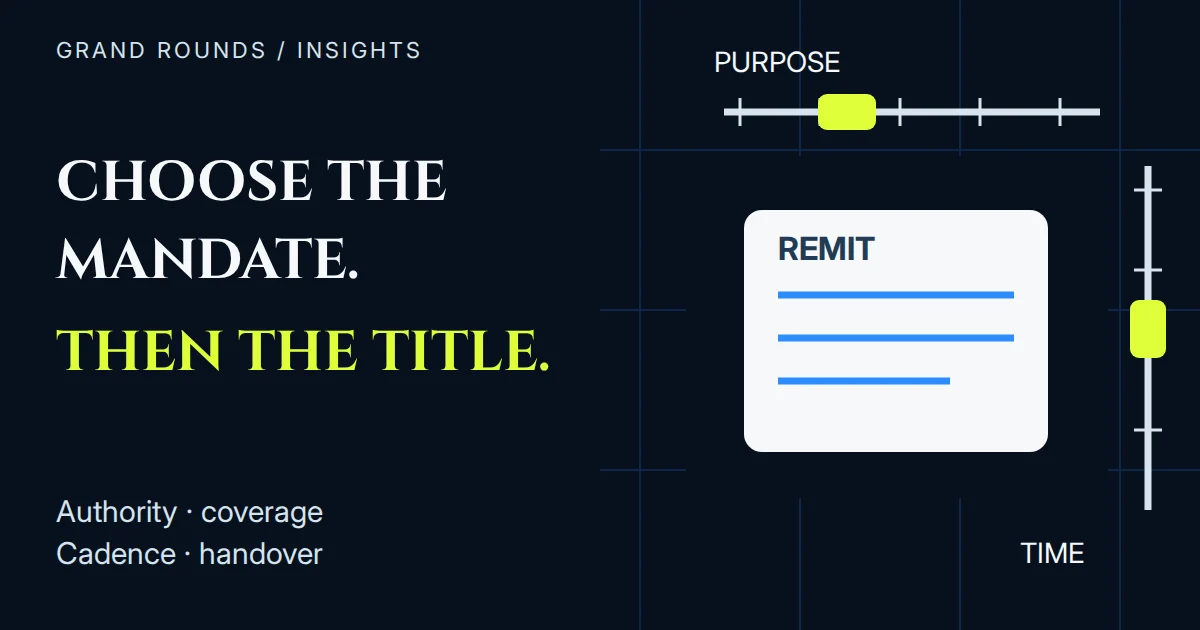
Fractional vs interim CTO: purpose and time are different questions
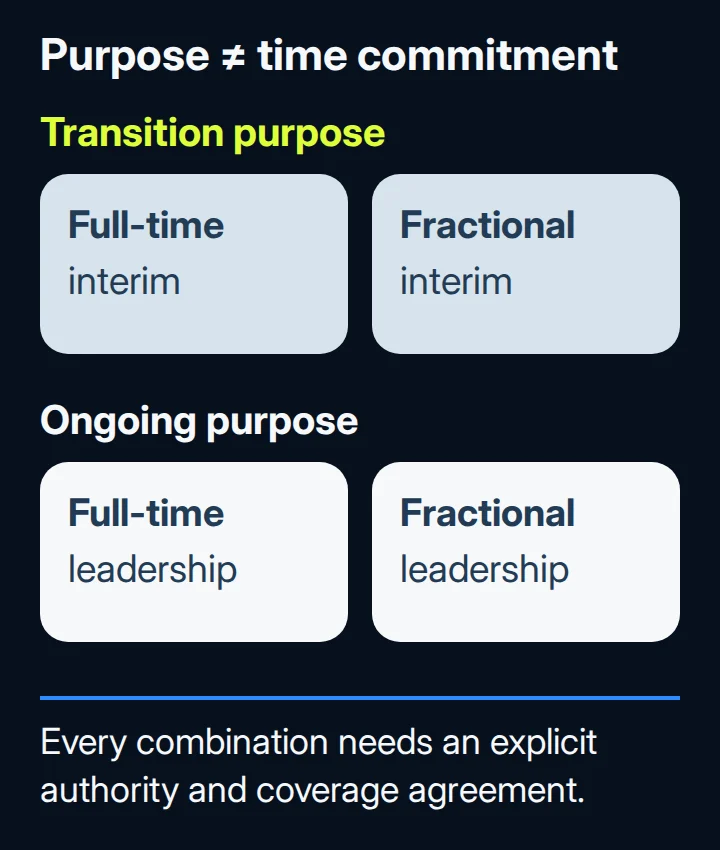
For this comparison, interim describes a transition purpose: leading until a defined event, such as a permanent leader taking responsibility or an agreed transition being accepted. Fractional describes a time commitment: the CTO is engaged for part of their working capacity rather than full-time.
The formats combine. An interim CTO can work full-time or fractionally. A fractional CTO can have a transition remit or an ongoing remit. Define permanence and coverage separately from full-time commitment.
None of these terms establishes decision rights, working hours, response expectations or on-call responsibility. Put those in the agreement rather than relying on the title.
Which mandate fits which situation
| Your situation | Consider first | Check before you commit |
|---|---|---|
| The CTO is leaving and decisions are due before a successor starts | Interim leadership, full-time or fractional, with exit criteria | Who accepts the decisions at the end; who covers them while one person is away |
| The lead runs delivery but senior decisions pile up around architecture or suppliers | Fractional CTO with an ongoing or transition remit | Latest useful time and backup for each decision |
| The lead has authority and needs help with specific decisions | Support or coaching for the current lead | What the lead keeps; what comes off their workload |
| Decisions need senior attention throughout the working day | Full-time leadership, permanent or interim | Authority, recruitment route and cover until the person starts |
| The required role remains unclear | List the decisions for the next milestone first | Authority, evidence and time to decide for each one |
Fractional, interim, full-time or support: comparison table
Pick a bounded outcome—for example, accepted technical leadership through the next product milestone and a documented transfer of responsibility afterward. Compare arrangements against that same outcome, including the option of keeping your current lead in charge.
| Arrangement | A reason to consider it | What must be made explicit | Where it can leave a gap |
|---|---|---|---|
| Full-time CTO with a continuing remit | The company needs sustained technical leadership across architecture, people and cross-functional decisions | Actual authority, responsibilities retained by product/CEO, recruitment process and transition coverage | Decisions fall to nobody between a resignation and the start date, and incident cover is left unagreed |
| Interim leadership, full-time or fractional | There is a defined transition to lead, with a named endpoint or review condition | Temporary authority, operational coverage, exit criteria and receiving owner | No accepted recipient exists when the end event arrives, so the decisions revert to nobody |
| Fractional CTO with an ongoing remit | Senior decisions can fit an agreed cadence, with capable daily leadership between those decisions | Decision windows, preparation, availability, backup and boundaries with the lead | Unplanned operational decisions may arise faster than the agreed coverage can handle |
| Support or coaching for the current lead | The lead can retain authority but needs help with particular decisions or leadership development | Decisions the lead retains, the supporter's advisory role, capacity changes and escalation | Operational, people-management and incident duties are left unassigned |
A career example of a bridge mandate
As stated in Andrew Frith's profile, his work includes a Group CIO contribution at Cloudfm. Use the source to discuss his personal responsibilities and handover; confirm the involvement and end condition needed in your case rather than inferring them from a career title.
Test the mandate against the decisions due
List the decisions due before the next milestone. For each, name the authorized decider, latest useful decision time, evidence required and escalation route. Ask the engineering lead what capacity remains after daily delivery.
Coverage includes the time between planned reviews. Set the response expectations, backup, incident responsibility and reserved sponsor approvals explicitly. A recurring meeting is only one part of that arrangement.
Copy this mandate, cadence and handover template
Copy the template and fill it with the sponsor, engineering lead, product counterpart and finance. Mark each responsibility proposed or accepted; confirm authority and capacity before starting.
| Part of the mandate | Write down |
|---|---|
| Business outcome | The product milestone or leadership responsibility to cover; evidence that it has been accepted |
| Purpose and commitment | Ongoing or transition purpose; proposed full-time/fractional participation; actual terms still to agree |
| Decision scope | Named architecture, delivery, people and supplier decisions; what remains outside the remit |
| Authority | Who may decide, who authorizes spend and commitments, and which product or specialist approvals remain separate |
| Team interface | What the current lead retains, what moves, who manages whom and who executes the work |
| Cadence | Decision types, required preparation, agreed decision windows and deadlines |
| Coverage | Availability to agree, asynchronous expectations, unavailable-owner backup and incident responsibilities or exclusions |
| Acceptance and review | Named reviewers, usable records, unresolved-dependency handling and the event that triggers a remit review |
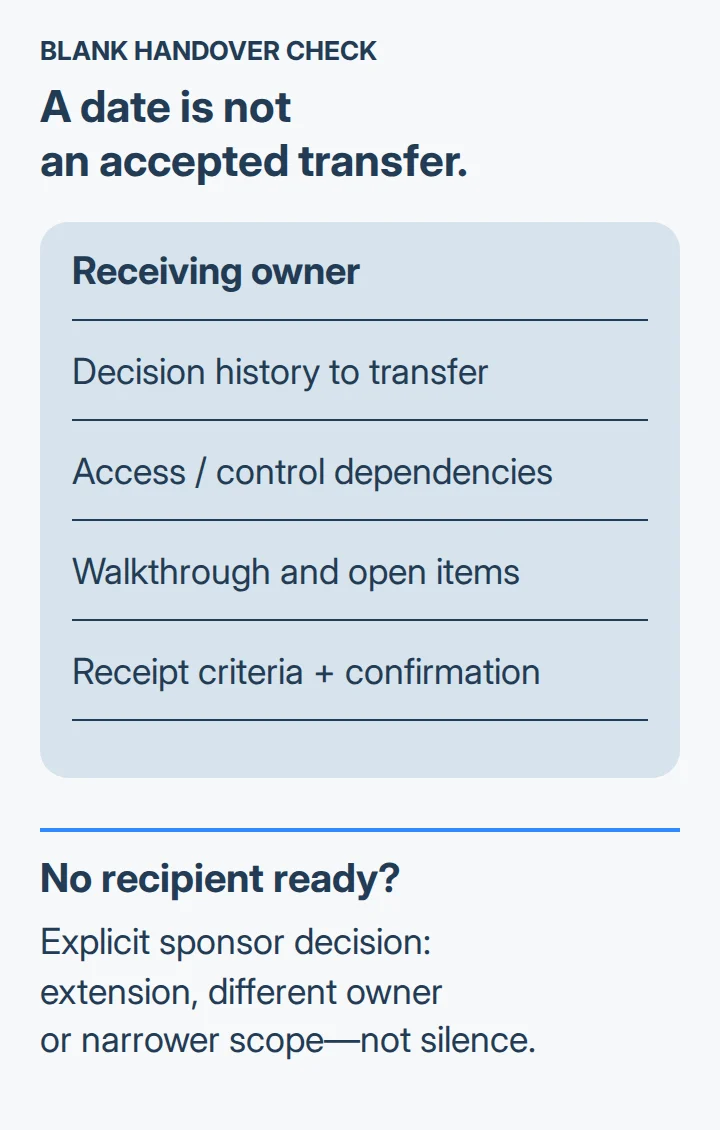
| Exit and handover | Receiving owner, decision history, access/control dependencies, walkthrough and confirmation of receipt; escalation if the receiving role remains unfilled |
An invented example: when fractional is not enough
Imagine a fictional product company that has asked for "a fractional CTO two days a week" to unblock a platform decision. Its engineering lead manages delivery and the team is stable. Completing the template shows two kinds of decision: an architecture choice that can be prepared ahead of a planned review, and a stream of integration and release questions that need an owner during the working day.
A fractional remit fits the first kind, provided the decision windows and backup are written down. For the second kind, either the lead accepts the decisions once other duties move, or the company needs fuller coverage: full-time leadership or an interim mandate with a named recipient at the end.
Change the example: all open choices can wait for a scheduled architecture or supplier review, and the lead already covers daily release decisions. The part-time remit may now fit outright. Conversely, if the lead has time but lacks spending authority, adding CTO days leaves the gap unresolved until the sponsor assigns the commercial decision.
Use the example to ask: for each decision, who decides, by when and who covers absence? The scenario is constructed for this coverage test.
Next step
If you have chosen a recurring leadership remit, read about fractional CTO support. If the need is a transition, read about interim CTO support. If the gaps are still unclear, start with which technical decisions have no owner.
To discuss a remit with a person, bring it to a conversation with the Grand Rounds curator. Development stays with your team or chosen provider. Terms and start conditions are agreed separately once scope is clear.
Boundaries
This is a decision aid for product companies with an existing team and a sponsor who can authorize a remit. The agreement sets decision rights, hours, response expectations and incident cover. The comparison covers formats; scope and terms are agreed separately. A single code review or specialist task is better handled directly. A leadership remit covers decisions, criteria and oversight; implementation remains with your team or chosen provider. Participation, availability and terms are confirmed separately.
Grand Rounds is an initiative of Dinarys, and a conversation may lead to cooperation with Dinarys.