











CTO services · Fractional and interim CTO

Fractional CTO Services: What a Part-Time CTO Covers and When It Fits

A fractional CTO is a senior technology leader engaged part-time for defined responsibilities: architecture and supplier choices, leadership of a milestone, or support for an overloaded engineering lead.

  • Senior ownership without a full-time seat
  • Can support your lead rather than replace them
  • Interim cover when a successor will take over

Our network includes CTOs, engineering leaders,
and technical advisers with experience at and around companies such as:

IBM Stripe UBS Citi Fujitsu Wipro InHealth GSK TransUnion Deloitte J.P. Morgan
SAP NHS Marie Curie BBC Anthropic CMH Clinic SE Health Sartorius Illumina Achilles Therapeutics Prevayl

Signs a fractional CTO fits your team

A proposed fractional role needs an existing team or vendor, a funded business task and a sponsor who can authorize the work.

  • An overloaded engineering lead

    Your lead manages delivery but needs senior support or a redistribution of architecture, supplier or leadership decisions.

  • A CTO leaving, no successor soon

    A fractional seat could own defined decisions. If a permanent successor is expected, compare interim cover instead.

  • A milestone that needs leadership

    A product milestone requires cross-functional technical leadership that the current arrangement does not cover.

  • Work that can follow a cadence

    Decide which matters can follow a planned cadence; for daily presence or on-call incidents, consider a permanent or interim leader.

What a fractional CTO can take on

For each workstream, agree the authority, actual coverage and evidence the receiver will accept.

  1. Architecture and technical exceptions

    The CTO's decisions versus the lead's delegated ones, with product and specialist approvals kept separate.

  2. Delivery and people leadership

    What the CTO directs, what the lead retains and who manages whom; your team or vendor executes.

  3. Suppliers and commitments

    A technical recommendation; budget, contract and customer decisions stay with authorized decision-makers.

  4. Incidents, only if scoped

    The existing response owner stays. Any extra CTO duty, coverage and backup is explicitly scoped, or explicitly excluded.

  5. A decision record or scorecard

    The output might be a role scorecard, a technical decision record or an agreed division of responsibilities with your lead.

  6. A handover the lead can use

    The receiving lead should be able to locate the rationale, explain what they now decide and use the exception route.

Interim CTO · Leadership transition

Interim CTO services for a CTO transition

An interim CTO, also called a temporary CTO, takes responsibility for agreed technical decisions through a leadership transition, then hands them to an accepted successor.

  • When a temporary CTO fits

    A departing CTO, or a lead who can run delivery but cannot absorb the uncovered cross-functional responsibilities.

  • How it differs from fractional

    The exit event, not the hours: interim cover ends when a successor accepts the responsibilities; fractional may continue without one.

  • Take over a bounded mandate

    Use the roadmap, backlog, near-term customer commitments and vendor decisions to identify what cannot wait.

  • Hand over to an accepted recipient

    Agree the receiving owner, decision history, outstanding risks, authorized access confirmations, walkthrough and receipt.

Who owns what with a part-time CTO

Recommending a change is not authorizing it: keep an assignment marked proposed until the receiver accepts it and the sponsor authorizes it.

  1. The fractional CTO

    Leads agreed decisions, criteria and oversight. Incident cover, hiring support and transition work are agreed separately.

  2. Your current lead

    Retains the decisions you agree, confirms the boundaries and can explain how an out-of-scope decision is resolved.

  3. Your sponsor

    Authorizes the mandate. Budget, contracts and customer commitments remain with authorized decision-makers.

  4. Implementation and specialists

    Your team or chosen provider implements. Specialist sign-off stays with the responsible reviewers; administrators confirm account permissions separately.

From one uncovered decision to an agreed role

  1. Draft five lines

    The milestone, the uncovered decision, what your lead retains, who authorizes the mandate and what an accepted handover looks like.

  2. Ask the curator

    Discuss relevant CTO experience and the proposed role.

  3. Test the working fit

    Ask what the person personally decided on a comparable decision, who executed it and how the incumbent lead reacted.

  4. Agree rights, coverage and handover

    For each workstream: the authority, actual coverage and the evidence the receiver will accept.

  5. Lead, then hand over

    The CTO leads agreed decisions; your team or chosen provider implements. Attendance alone is not acceptance.

Bring us your case

Contact the Grand Rounds curator to discuss relevant CTO experience and the proposed role. The next decision is whether the person, authority and working arrangement fit your team.
Discuss a fractional CTO role
Invented scenario · a B2B product company

Example: how a proposed CTO handles your lead's objection

An interview technique, not a validated test or proof of future performance: bring a sanitized scenario like this to your discussion with the curator and the proposed CTO.

The situation

A B2B product company is preparing a customer rollout. A proposed CTO favors replacing a shared component before expansion; the engineering lead argues the evidence does not justify the disruption, and product wants to preserve the rollout commitment.

Ask the proposed CTO to explain

  • What evidence would distinguish a necessary change from a preference, and what remains unknown?
  • Which alternatives deserve consideration, including keeping the component with explicit limits?
  • Which decision belongs to the technical owner, and which customer or budget changes require sponsor approval?
  • How would the lead's objection be recorded, and what would trigger reconsideration?
  • Who would carry out and accept any agreed work?

What to look for in the answers

Look for how the person exposes assumptions, respects the lead's evidence and distinguishes recommending a change from authorizing it.

What we believe

We work best with founders who believe in what they are building

Every founder brings a different challenge. What stays the same is how we approach it.

Grand Rounds video session: David Carroll with CTOs Neil Catton and Edoardo Turelli, and curator Jane Vyshnova
David Carroll Founder of Euryan David came to Grand Rounds with two open questions he wanted pressure-tested before taking them to investors: how Euryan should handle LLM and cloud strategy across different client environments, and whether the core product wedge, dynamic FMEA/8D automation, was the right foundation to build the rest of the roadmap on.
Grand Rounds video session: Susie Williams with CTOs Neil Catton and Jerome MacGillivray, and curator Jane Vyshnova
Susie Williams Founder of LinkEDtohome Susie came to Grand Rounds with two questions she wanted pressure-tested before LinkEDtohome moved beyond its first school: how to scale the team and technology without building too far ahead of real demand, and what needed to be in place around AI liability, training and governance before broader adoption.
Grand Rounds video session with Alexander Gorrie, Krupa Shankar, CTO Berkan Sesen and curator Jane Vyshnova
Alexander Gorrie Founder Alex came to CTO Grand Rounds with several important technical decisions already being actively worked through. One question from the panel reframed the discussion: “How will you know that the result is actually good?” It sharpened the conversation around how those decisions should be sequenced and prioritised.
Grand Rounds video session with Tomas Jankauskas, CTOs Neil Catton and Thomas Döhler and curator Jane Vyshnova
Tomas Jankauskas Founder of Neural DEEP Tomas came to Grand Rounds with a question he'd been wrestling with while bringing AI-driven innovation into Toyota: which ideas to pursue, and how much to build before anything was approved, in an organisation where every new idea needs to pass through many hands.
  • Products with a purpose

    Technology that delivers a real outcome for people, not technology for its own sake.

  • Energy and enthusiasm

    Founders and teams with the passion and drive to address a problem they have seen for themselves.

  • The story before the numbers

    The first question is what you are trying to do and why: what you saw and why you started.

  • Listening more than talking

    Nobody walks in to say “I know better.” We ask what drives a decision and what has not been considered, then work through the options together.

  • Understanding before fixing

    First the people, the business and the why, and what has and has not worked, so the first problem found does not start constant firefighting.

  • Experience, not just knowledge

    Modern and AI tools assist. Architecture, security, recovery and user experience still need people who have built and run real systems.
CTOs in the network, fractional and interim experience first

Neil Catton's profile describes independent fractional CTO/CIO and board-adviser work. Andrew Frith's profile describes Group CIO work at Cloudfm; the title alone does not establish the authority an interim mandate needs.

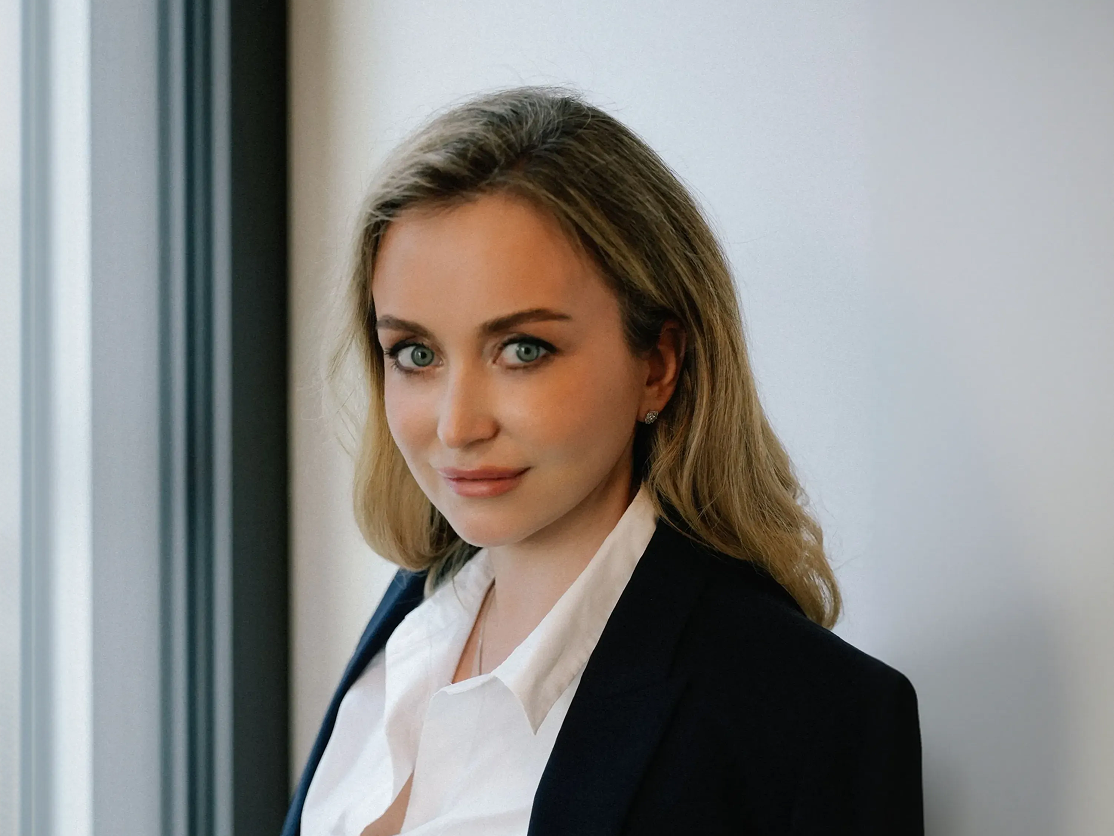
Jane Vyshnova
About us

Jane Vyshnova

Curator of Grand Rounds

I've spent 12 years building partnerships between founders, technical teams, and the people who fund them. Somewhere along the way I noticed the same pattern over and over: brilliant fractional CTOs with real availability, and founders who had no idea they existed, let alone how to reach them.

Grand Rounds is my answer to that gap. The name comes from medicine, when a case is hard, doctors don't decide alone, they bring senior specialists around the table together. I built the same thing for technology.

"People need people. Nothing else works."

I'm the one who listens to your problem, asks the questions you didn't think to ask yourself, and figures out exactly which 2 or 3 people in my network have actually lived through it before.

Jane has been working across the industry since 2014, connecting startups, retailers, B2B companies, manufacturers, and expert teams around meaningful partnership opportunities.

Her experience includes building bridges between companies and ecosystems, ready-made technology solutions, manufacturing-focused initiatives, and sustainability-driven projects. Over the years, she has helped create practical collaboration models between businesses, technology providers, and industry experts.
For Jane, partnership strategy is not just part of the work - it is the DNA of her professional experience. Her focus is on identifying where teams, platforms, products, and industries can strengthen each other and turning those connections into real opportunities.

What founders say after their Grand Rounds session

It's like a hackathon for your real business problems. You bring your challenges and bright minds work on them - with no obligation, no pressure. I walked away with perspectives on investors, encryption solutions, and a connection that could directly benefit my product. Honestly, why rely on one mind, when you can have many?

Saif Alam
Saif Alam CEO at Keepsta

It was an incredibly welcoming space to connect with senior technical minds I wouldn't normally have access to as a non-technical founder. A fantastic opportunity to get real, honest answers to the challenges I was facing - and to walk away with meaningful connections who continue to support me.

Audrey Lee
Audrey Lee Founder of Lumi

CTO Grand Rounds was the best event by far. This is where the founder world and the tech world actually merge, with real introductions instead of leaving people to stay siloed. I was deep in a conversation about cybersecurity and feedback loops - practical advice I could act on immediately.

Hélène Le Roux
Hélène Le Roux CEO at Trippin'

What I valued most was the mix of CTO styles at the table - some all-in on AI, others more measured. As a founder, you don't want someone else's answer, you want enough perspectives to make your own call. I walked away with two strong contacts - people who hit the mark on build support, strategic fit, and investor credibility. The relaxed format made room for real technical conversation, not just quick decisions. Worth coming back for.

Hew Williams
Hew Williams Founder of Zeorb

What to draft before you inquire

Draft one line for each, and leave unknowns marked as unknown.

Business milestone
What the role must support
Uncovered decision
What nobody owns today
Your lead
What they retain
Sponsor
Who can authorize the mandate
Receiving team
Who accepts each output
Coverage and backup
Cadence, urgent exceptions and backup
Accepted handover
How you would recognize it
Working fit
One sanitized disagreement scenario

Fractional participation needs a workable relationship with daily leadership.

FAQ

Questions before you agree a fractional or interim CTO role