
A supplier says the handover is done because the source code arrived as an archive. That shows what you were sent, not whether someone who did not build the product can build, release, run and recover it.
Short answer. Accept the handover only when a new authorized person, using accounts and documents the company controls, has built, deployed, operated and recovered the product while the outgoing team answers recorded questions but does not type. Holding a code archive is not operational independence and is not proof that the company owns the rights in the code. Anything the test cannot show stays on the page as "failed" or "not yet tested", with a named owner and a date.
This page is for a founder replacing a software supplier or taking an outsourced product in-house. Grand Rounds is an initiative of Dinarys, and a conversation may lead to cooperation with Dinarys. It is not legal advice: each contract and rights point is an item to confirm with your own lawyer.
Which assets and rights must transfer?
Table 1 is the receiving-team handover and independent-deployment acceptance test: for each of seven inputs, what the receiving team shows, the evidence you would see and who answers for it.
Table 1. Receiving-team handover and independent-deployment acceptance test
| Input | The receiving team shows | Evidence you would see | Accountable |
|---|---|---|---|
| Repositories and IP rights | Code and history sit in a company-owned repository; the rights position is written down | Company-owned repository with named admins; lawyer's note on assignment or license | Founder (rights); receiving lead (repository) |
| Build and release access | A new person builds and releases with company-held identities | A pipeline run under company accounts; supplier credentials rotated afterwards | Receiving lead |
| Dependencies | Every outside service, library, license and account is listed with an owner | Inventory with account holder, billing contact and renewal date | Receiving lead; outgoing lead confirms |
| Runbooks | Steps to build, deploy, monitor, roll back and restore have been followed by someone new | A run log recording every question the tester had to ask | Receiving lead |
| Unresolved risks | Known defects, shortcuts and unknowns are in one register | An owner and a date on each entry; "unknown" is allowed, blank is not | Outgoing lead lists; founder accepts |
| Outgoing and receiving owners | One named person per side answers for the handover, with cover | Names and deputies in writing | Founder |
| Deadline | The contract end and the date the test needs to finish are fixed | Dates in writing, and what happens to gaps found after the end | Founder; lawyer for contract terms |
Mark each row "shown", "failed" or "not yet tested"; in this test, a failed or untested row among the first four means the handover is incomplete.
Rights are separate from files. GOV.UK's copyright guidance (dated 19 August 2014, read 18 November 2026) says the creator is usually the first owner and, for commissioned work, the commissioner is not the owner "unless you otherwise agree it in writing"; a court may imply a license that may be limited and non-exclusive. It does not mention software. Ask your lawyer whether your contract assigns the rights or only licenses them, and how it treats the supplier's own tools and any open-source or third-party components.
Can the receiving team deploy and recover without the outgoing agency?
Illustrative example, invented, not a client: code is transferred, but deployment still uses the outgoing supplier's cloud account and undocumented secrets. The handover remains incomplete until company-controlled access and a receiving-team release are verified.
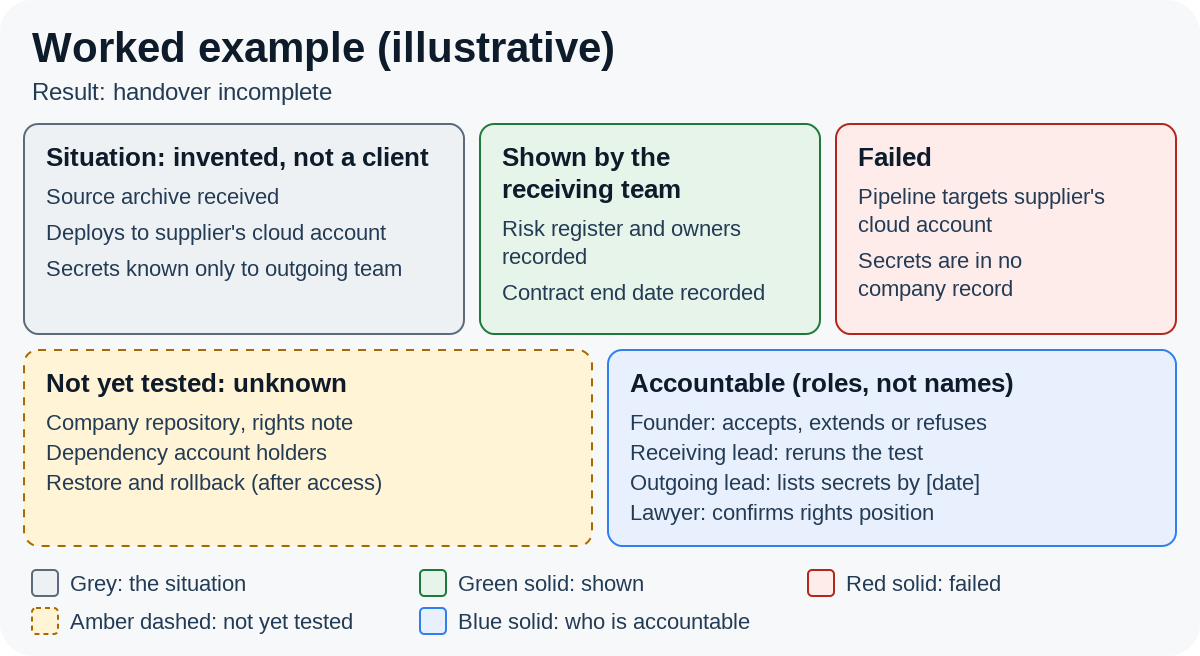
Table 2. The same example, completed (illustrative)
| Input | State | What the tester found | Next action, owner, date |
|---|---|---|---|
| Repositories and IP rights | Not yet tested | Archive received; no company repository; no lawyer's note | Create repository; lawyer confirms rights. Founder, [date] |
| Build and release access | Failed | The pipeline targets the supplier's cloud account | Move it to a company account; rerun. Receiving lead, [date] |
| Dependencies | Not yet tested | First list drafted; account holders not recorded | Add holder, billing, renewal. Receiving lead, [date] |
| Runbooks | Failed | Secrets are in no company record; the tester needed the outgoing lead | List every secret and where it is held. Outgoing lead, [date] |
| Risks, owners, deadline | Shown | Register, names and contract end date recorded | None |
Result in this example: incomplete. A full rerun is not possible until the company holds the cloud account and the secrets, so the founder chooses between holding acceptance and asking for more support time.
The independent deployment test, step by step
This is a rehearsal, not a document review. Run it in a non-production environment unless the decision owner and a technical specialist agree otherwise.
- Choose the tester. Someone who did not work on the product, authorized by the company, with company-issued accounts.
- Start from the company repository, not the archive.
- Build from the written steps. Log every question put to the outgoing team; each is a documentation gap.
- Deploy to a company-controlled environment. The cloud account, domain registration and certificates should belong to the company, and billing and security emails reach it.
- Release a small change, such as a version label, through the real pipeline, with the tester doing every step.
- Operate. Find the logs and alerts, rotate one secret and confirm the product still works.
- Recover. Restore a backup into a clean environment and roll back a release. The business owner writes the recovery targets before the test; use "[recovery time]" rather than borrowed numbers.
- Close outgoing access. Remove or rotate supplier credentials, then repeat step 5.
If a step needs the outgoing team typing, record it as failed. If a step is skipped, for example because regulated data cannot enter a test environment, record "not yet tested" and name who decides how to test it. For regulated or safety-related products, the specialist accountable for that field decides what evidence is enough.
What must transfer for AI-generated or AI-assisted software?
One owner covers the handover whether a supplier team, AI tools or both wrote the code. AI adds items to the same test; it does not need a second process.
Table 3. Extra inputs for AI-built or AI-assisted software
| Item | What to hold | Why |
|---|---|---|
| Tool and model-provider accounts | Company-held accounts and keys, with usage visible | ARDURA says a client-held provider account "sees usage, sets limits, and keeps the account when it changes developer" |
| Prompts and instruction files | Prompts, agent rules and configuration in the repository or a company store | ARDURA lists prompts among artifacts to name in the contract; the reasoning behind a prompt "rarely makes it into documentation" |
| Evaluation set and results | The cases that define "works", plus the last results | A new team can see whether a change made things worse; TechGeek UK says its handover can include evaluation results |
| Versions and build | Pinned model and dependency versions; a clean-machine build | The test shows whether the build is reproducible |
| Record of generated code | Which areas were AI-generated or AI-assisted, and who reviewed them | Our suggestion, not a requirement in any source read |
| Rights and licenses | Tool terms and licenses of generated or included code | A question for your lawyer |
ARDURA says it is unclear whether prompts are protected works, so a contract should not rely on that status. The GOV.UK page above does not address computer-generated works. Ownership and protection of AI-generated code is therefore a lawyer's question, not one this page answers.
The tester should also read a sample of the generated code and its tests. Code that passes tests nobody understands has transferred files and little knowledge. If nobody on the receiving side can explain a part of the system, record it as an unresolved risk with an owner.
Who accepts gaps before the contract ends?
The decision owner accepts, and only gaps they can name. In Table 1 that is the founder, using results from the technical lead who ran the test. The outgoing lead confirms answers and lists known risks. Specialists in security, data protection, finance or a regulated field accept their own areas. The lawyer confirms the rights position and any contract change.
A career beside the acceptance decision
The closest Grand Rounds evidence is career work, not an engagement. Rolling out one case management system across the NSPCC's 40+ sites lists the buyer decision "Our delivery is badly delayed or our vendor isn't performing - what's actually going on, and how do we recover it?" and records that Jerome MacGillivray delivered the NSPCC's Alpha Program, a case management system on Microsoft Dynamics CRM and SharePoint, and led the ChildLine Online Redevelopment Project. Its stated scope is 1,000 users across more than 40 sites. Building an SAP customer experience team from scratch to nearly 50 lists "Should we build, buy, or outsource this piece, and how do we retain control either way?" and records that they built an engineering unit from scratch at Techwave's European delivery center and grew it to nearly 50 people.
What to ask a candidate adviser: what did they personally own on a vendor recovery, and what had to be in company hands before the supplier stepped back? Neither page says anything about a supplier exit, a handover, documents, deployments or dates, so those answers are not on the pages. Both state that they describe Jerome's own work before Grand Rounds, are not Grand Rounds engagements and are not a promise of the same result for another company. They do not establish availability, certification, independent verification or the same result for you; the Meet the CTOs page states no availability. Your lawyer, your specialists and you as decision owner keep acceptance.
Exit terms and the gap register
On exit terms, two suppliers' own pages make a similar point, and both are supplier statements, not independent findings. TechGeek UK's engagement page (undated) says "Exact ownership, intellectual property, support, hosting and exit arrangements belong in project-specific agreements". ARDURA Consulting, in a post dated 16 November 2026, calls "We will hand over the source code" a disqualifying answer when it is the whole exit plan.
Before the contract ends, put every "failed" and "not yet tested" row in a gap register: the gap, the consequence if left, the owner, the date and the decision. The decision is one of three:
- Hold acceptance until the row is shown.
- Extend or add support, with scope, end date and price agreed in writing; check the terms with your lawyer, because this page does not know your contract.
- Accept with a named risk, signed by the decision owner, with a date to retest.
In the example, holding acceptance is the natural option: accepting would leave the product dependent on the outgoing team's account after the contract ends.
If the open question goes beyond paperwork, for example whether the architecture can be run by a smaller team at all, a bounded review can be the next decision. Technology Assessment & Architecture Review describes "a bounded review of architecture, delivery records and dependencies against a business decision", says "The assessor advises in writing; your team decides", describes the memo as a proposed output of a separately agreed assessment and lists no price.
Next step
First use the receiving-team handover and independent-deployment acceptance test with your current team: fill in Table 1, run the deployment test in a non-production environment and write the gap register before the contract ends. If a decision or expertise gap remains, take the decision, the deadline and the evidence to the relevant Grand Rounds service or curator; any engagement is separately scoped, and no price or availability is stated here. The Talk to the person shaping the room page describes a conversation with the curator about the next Grand Rounds event and whether your company's business or technical challenge could be selected for it.
Limits of this page
- Table 2 and the diagram are an invented illustration, not a client case or measured result.
- The pass/fail rule (a failed or untested row among the first four means incomplete) is a working checklist, not a validated method.
- We contacted no supplier and tested no handover. We have no view of your contract; nothing here is legal advice.
- Source statements are snapshots read on 18 November 2026. TechGeek UK's page shows no date, and ARDURA's post is a supplier's own view.
- The career case is public first-party evidence about Jerome MacGillivray's work before Grand Rounds, not a Grand Rounds engagement.
Pages read, 18 November 2026
GOV.UK, Ownership of copyright works, ARDURA Consulting, 12 questions before you sign, TechGeek UK, How we engage, and the Grand Rounds pages linked above.