
After a founder says yes to a CTO introduction, four questions need written answers: who is the client, who pays, what does the founder share, and who receives what the CTO produces? A platform team that records them before the first call can see afterwards whether the interaction helped.
In this referral process, introducing the parties makes the fund the referrer, not automatically the client or payer. The company identifies who may order and pay for work; the founder and authorized information owners agree what may leave the company.
This page gives you that record: the roles to name, the two outputs to keep separate (technical note and partner update), the paid-scope fields and a usefulness check. It is a working aid, not legal advice.
If the match itself is still open, start with matching a founder with a CTO. This page starts after the founder has said yes to an introduction.
Next step: Talk with the Grand Rounds curator about the founder-approved brief. Ask what the proposed next step involves, rather than treating the introduction as an engagement.
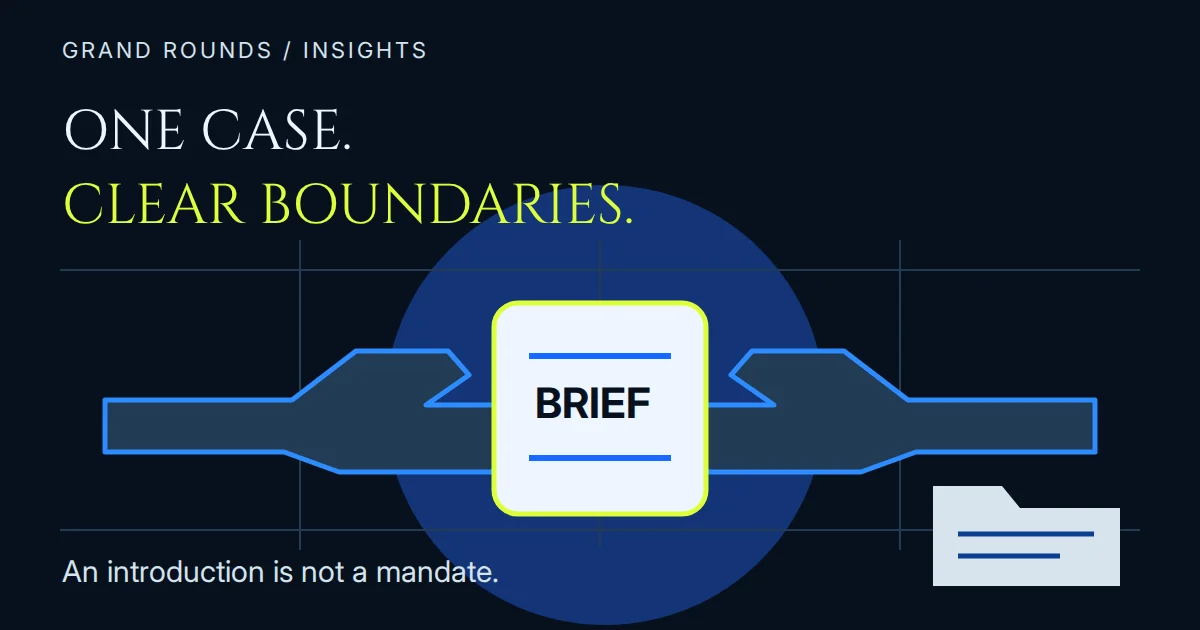
Name the parties before sending the brief
Name the parties before sharing the brief. A person may hold several roles; record each explicitly.
| Role | What it decides or does | Does not follow from a fund introduction |
|---|---|---|
| Referring partner | Opens the connection and proposes whom to introduce. | Becoming client or payer. |
| Founder sponsor | Defines the need and what may be shared within their authority. | Authority to order paid work unless the company has given it. |
| Client | Orders any paid work. | Being the referring fund. |
| Authorized signer | Binds the client to terms within delegated authority. | Being the same person as the sponsor or payer. |
| Payer | Agrees to pay for the engagement. | The referring fund paying by default. |
| CTO | Provides the contribution agreed in the scope. | Availability, implementation or an outcome. |
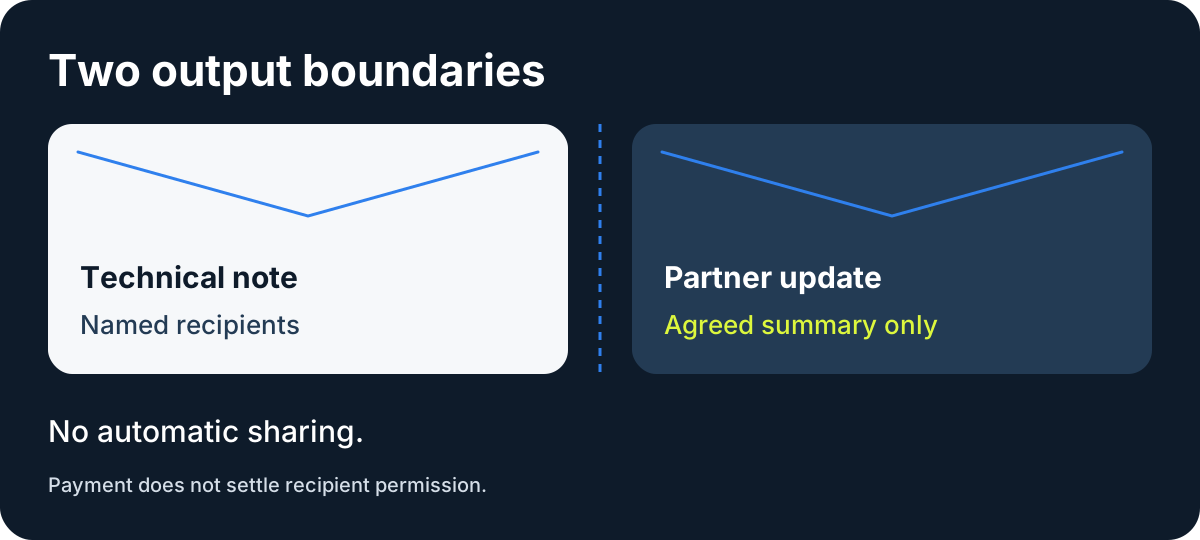
| Permitted recipients | Receive the agreed technical note or partner update. | Sharing with the fund beyond the approved update. |
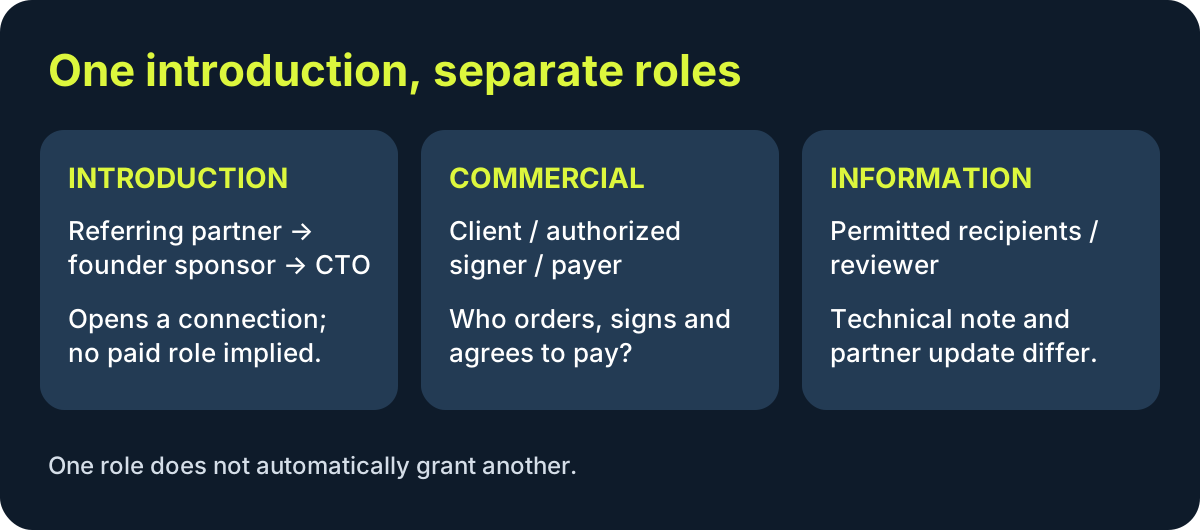
Confirm the permitted handoff
Agree the minimum brief, exclusions and recipients with the founder and authorized client. Keep technical findings and the partner update as separately approved outputs. Apply a defined correction and withdrawal route.
Make any paid mandate explicit
Ask any provider, including Grand Rounds, to record the decision/output, client/signer/payer, proposed contribution, declared interests, recipients, review conditions and start authorization before a paid mandate.
Declare interests before the first call
Grand Rounds may receive a share of project revenue when an engagement starts through us. Record any other interest a party declares in the table below. A fund introduction does not make the fund the client or payer.
Agree client, authorized signer, payer, permitted recipients and any later paid scope before work starts; later cooperation has separately agreed terms.
What would show that the first interaction was useful?
Ask the founder: What do you now know that you did not? What decision can you make? What would you do differently? Those are founder-reported answers, not demonstrated business outcomes. For paid work, keep the reviewer's accepted or not-accepted note against conditions agreed in advance.
Invented referral: a reporting feature before the first paid pilot
This is invented and unperformed. A seed-stage software founder must choose whether to keep a reporting feature in-house or buy a product before a pilot with a mid-sized customer. The fund’s platform team offers an introduction, and the founder approves a short brief about the decision.
The technical note and partner update are separate outputs. The introduction assigns neither recipients nor a paid role automatically; the filled record below makes the proposed boundaries explicit.
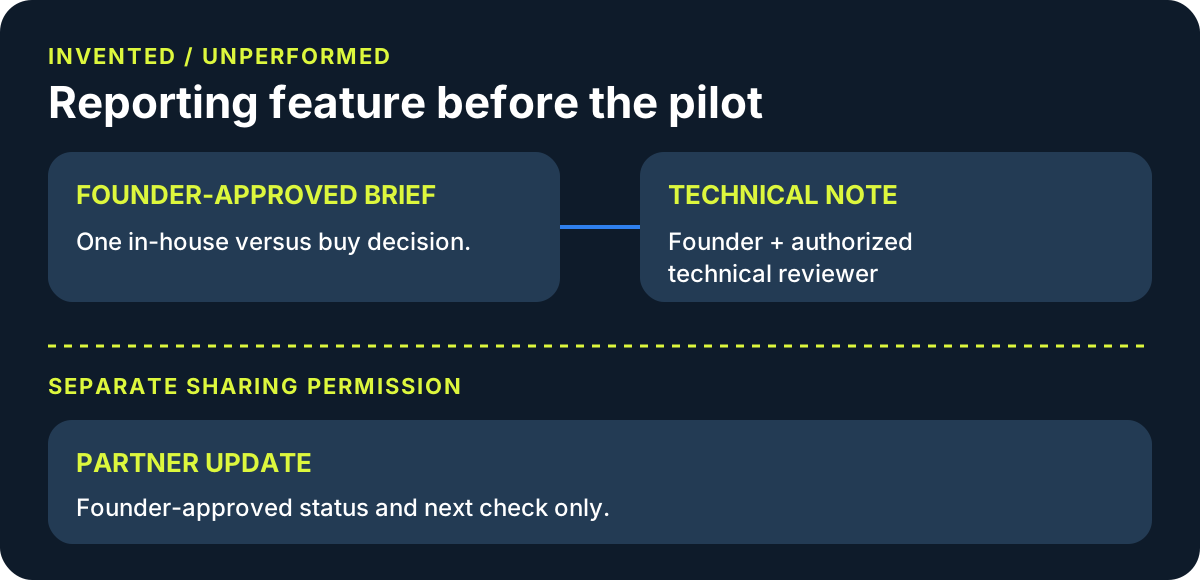
Copy the handoff and follow-up record
| Record field | What to record | Example — invented, not run |
|---|---|---|
| Founder-approved brief | Decision, summary, exclusions and approval date. | Keep the reporting feature in-house or buy a product before the pilot; approved summary and date recorded. |
| Parties | Referrer, sponsor, client, signer and payer. | Referrer: fund platform lead; sponsor: CEO; client and payer: company; signer: authorized CEO. No fund payment in this example. |
| Commercial relationship | Interests declared under Declare interests before the first call; proposed scope, terms and start authorization. | Interests recorded before the call; no scope agreed yet. |
| Technical output | Recipient, reviewer, record and limits. | Note to founder and company's technical reviewer; limits stated. |
| Partner update | Separately approved status and next check. | Founder-approved status only; no technical findings. |
| Follow-up | What became clearer, owner, date and continuing decision. | Record the founder's answer, decision now possible and next-check owner/date; actual answers remain unknown until the conversation. |
Use the record for one founder-approved case before proposing a wider program. Confirm role and information boundaries first, then ask Grand Rounds to put any proposed route and terms in writing.
Boundaries
This page is a working record for introductions, not legal advice or a statement about any founder's consent. A CTO supports a decision and its evidence; the company's team or chosen provider builds the change. A session summary or discussion note records a conversation, not a guaranteed outcome. Grand Rounds contact goes through the curator.
Grand Rounds is an initiative of Dinarys, and a conversation may lead to cooperation with Dinarys.