
Two IT teams disagree about the next integration step, both with credible reasons, and nobody has the agreed authority to settle it and answer for the transition.
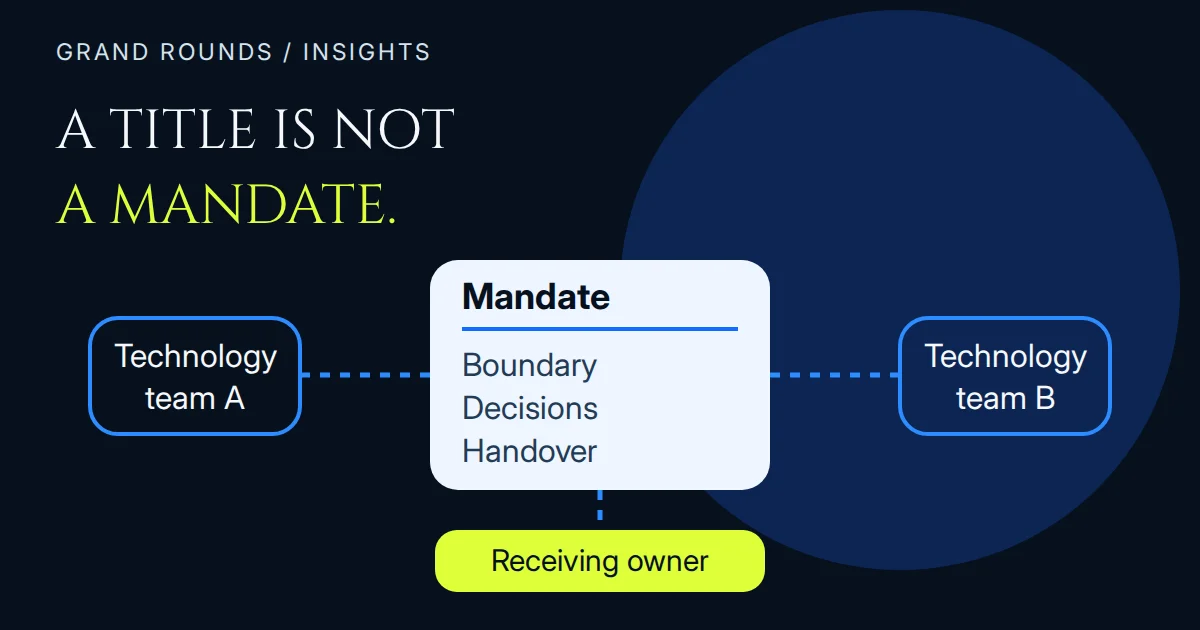
Short answer. An interim CTO for post-acquisition integration is a temporary technical leader who owns a defined set of decisions between the two businesses until a named owner takes over. Choose on two tests: has this person personally led comparable integration decisions, and can the sponsor give them a bounded mandate with escalation, acceptance evidence and handover recipients? Check the existing options first:
| Situation | Option to consider |
|---|---|
| A CIO with cross-business authority and an agreed plan | The existing CIO. |
| An accountable decision owner who needs challenge | An adviser. |
| An agreed plan that lacks delivery capacity | An implementation provider. |
| Decisions between the businesses that nobody is authorized to settle | A temporary executive with a bounded mandate. |
This is a selection heuristic, not a cost ranking. This page chooses the person and tests personal acquisition work; if you cannot yet name the decisions, read who owns the combined technology decisions first.
Your next action: agree the mandate and owners. Take one proposed remit to the sponsor and the receiving leaders.
Verify personal acquisition work, not proximity to a deal
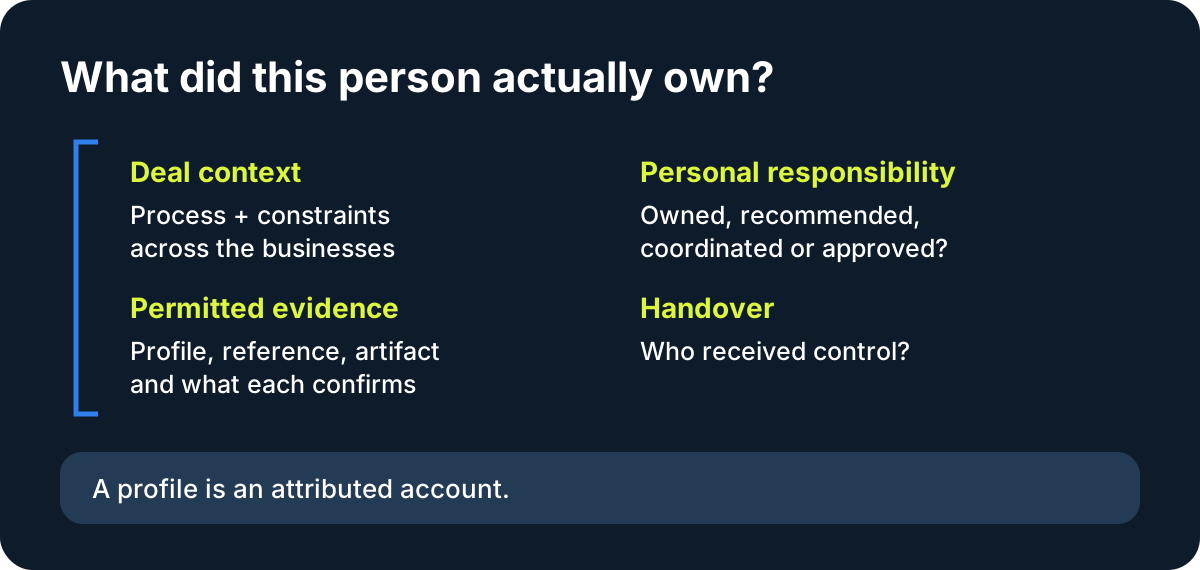
Ask for a personally owned integration decision: starting conditions, alternatives, delegated authority, reserved approvals, transition evidence and receiving owner. A permitted reference or record can corroborate the profile statement.
Red flags to investigate: no personal decision or receiving owner; a proposal starting with the target platform before the mandate; no stop authority or escalation; a reference that confirms only presence at a deal. These are interview prompts, not a validated pass/fail test.
Write the mandate before selecting the person
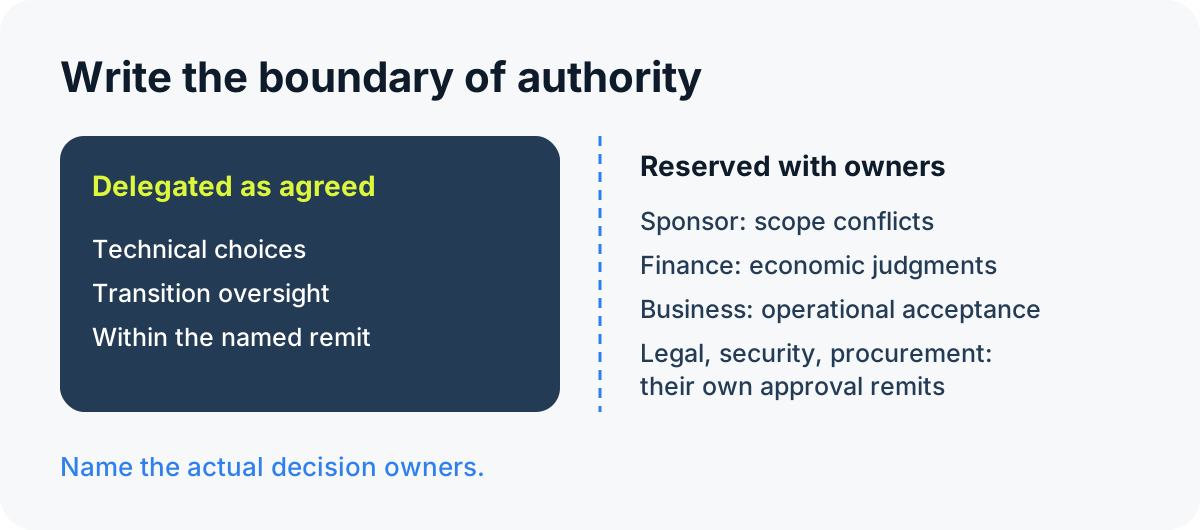
| Mandate element | What to write |
|---|---|
| Perimeter | One integration wave, business process and due decisions |
| Authority | Sponsor; delegated decisions; reserved specialist approvals |
| Operating cover | Cadence, backup, escalation and stop authority |
| Acceptance | Evidence, review date and accepting business/technical owners |
| End/handover | Named recipient, continuing controls, open items and accepted transfer |
Agree these before choosing the person.
Invented interview: one shared customer record?
An invented, unperformed exercise. Two businesses run separate customer-account systems. One team wants one group-wide customer record; the other wants to keep a local process that works. The sponsor asks: who decides, who must agree, what stays unchanged for now?
A stronger answer: "Within the scope you delegate, I decide the matching rule between the customer records and recommend the group-wide record to you. Finance approves the reporting definition; legal and security approve data sharing. Both local processes stay for now. I keep a decision log, retain evidence about duplicates and name who receives it at handover."
A weaker answer: "I would move both teams to one CRM and settle ownership once the design is agreed." The first names a delegated decision, reserved approvals, unchanged processes, evidence and a recipient; the second has not answered the authority question. Naming owners without explaining the evidence still leaves the evidence question open.
How to accept the result of a bounded integration mandate
Require evidence specific to each accepted outcome. Technical delivery, business operation and specialist approval are separately recorded with open conditions, owner and date. In the invented case, acceptance of the customer-record decision could be evidenced by its log entry, finance's approval of the reporting definition and the receiving owner's confirmation that they can run the process without the interim CTO.
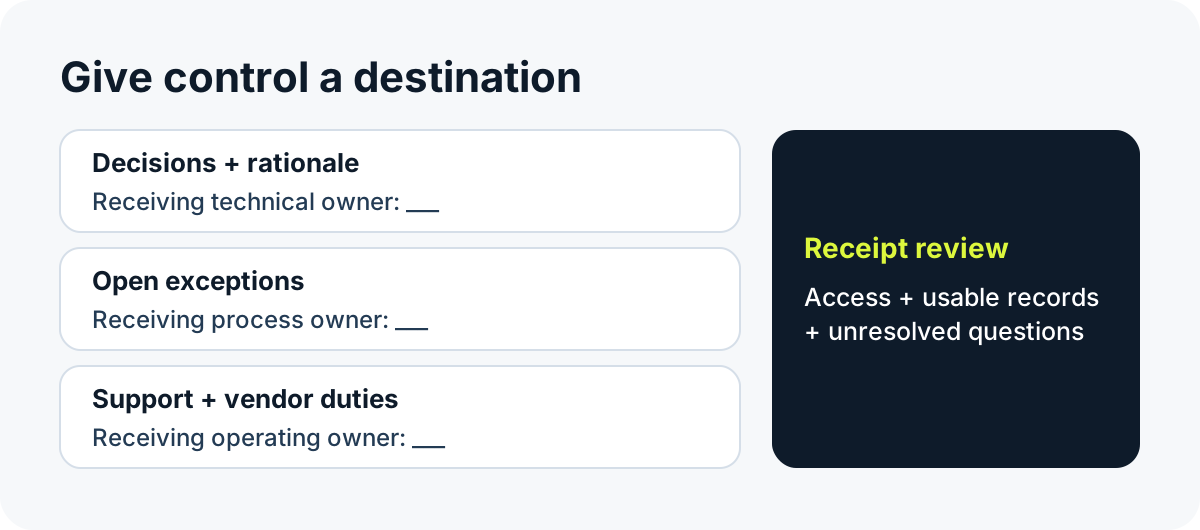
Hand over control, not just documents
Have receiving leaders use the decision log, runbooks, access arrangements and unresolved-item register. In the same invented case, hand over the matching decision and rationale to the technical owner, unresolved duplicates to the process owner, and support/vendor duties to the operating owner. Confirm continuing ownership and escalation before the temporary mandate ends.
Relevant integration and transition experience
As stated in Amer Murad's profile, his work includes a Data as a Service platform at Ceridian and building a compliance and governance function at Alludo. This supplies data/governance context, not evidence that he owned the cross-business decisions in your acquisition. Ask a candidate which decisions were personally theirs and who received continuing control.
What shapes the scope of an interim integration mandate
Scope follows the decisions, not the title:
- How many cross-business decisions are due, and how reversible each is.
- Which integration wave, system or governance question is in scope.
- How many systems, vendors and contracts need a named owner.
- How much hands-on leadership is needed each week.
- Who reviews outputs and receives continuing control.
- Whether the client team or a separately selected provider carries delivery.
Discuss the proposed need with the curator; a conversation is not an agreed engagement, price, duration or available person.
Boundaries
Use this model to define technical decisions for one agreed integration wave. Financial synergies, transaction advice and legal due diligence are scoped elsewhere. Implementation stays with your team or a provider you select. A profile states the CTO's own work; availability and a particular engagement require separate confirmation.
Grand Rounds is an initiative of Dinarys, and a conversation may lead to cooperation with Dinarys.
Questions and answers
Next step: bring one proposed mandate to the sponsor
Agree an integration wave, delegated and reserved decisions, escalation and receiving owners with the sponsor. Bring the proposed mandate to the curator to discuss the question and relevant CTO experience. Delivery stays with your team or a provider you select.