















CTO services · AI governance

AI Governance Consulting: Decision Rights, Evidence and Handover

Who can approve an AI action, inspect its evidence and stop it when the context is wrong? If those answers are still informal, a successful demo is not enough to move the workflow forward.

  • One workflow, not a policy rewrite
  • Each action tied to a named authorizer
  • Legal opinions stay with qualified parties

Our network includes CTOs, engineering leaders,
and technical advisers with experience at and around companies such as:
IBM Stripe UBS Citi Fujitsu Wipro InHealth GSK TransUnion Deloitte J.P. Morgan
SAP NHS Marie Curie BBC Anthropic CMH Clinic SE Health Sartorius Illumina Achilles Therapeutics Prevayl

Signs you need AI governance consulting

Consider it when you have a repeatable case type, documents you are permitted to use, an accountable process owner and a consequential technical decision to make.

  • A demo, but informal answers

    Approval, inspection and stopping are still informal, so a successful demo cannot move the workflow forward.

  • Moving beyond the sandbox

    You must decide whether an assisted case-preparation workflow can move beyond its sandbox.

  • Before it updates a record

    You must decide what has to change before the workflow can update a case record.

  • A gap across teams

    Your technical lead or current provider cannot close a material gap in authority, architecture or cross-team ownership.

Decision rights the CTO helps you set

A useful scope connects these decisions for your workflow, rather than producing a policy document in isolation.

  1. What may AI do?

    A workflow map from intake through evidence, draft and review to release, with permitted users, sources and excluded uses.

  2. Who has decision rights?

    A record naming the technical owner, domain reviewer, data and security owners, action authorizer and escalation recipient.

  3. What must be inspectable?

    Claim-to-source evidence, applicable versions, access boundaries, failure examples and an evaluation plan.

  4. Where must the workflow pause?

    Review points, missing-evidence behavior, stop conditions and recovery for actions whose outcome is uncertain.

  5. Who receives the work?

    A receiving-owner record, unresolved questions, operational instructions and a bounded next backlog.

  6. What is monitored after handover?

    Who watches which signals, how often the receiving owner reviews them, and what sends the work back to acceptance.

Who decides each step, from sponsor to operation

Each step of the decision-rights chain needs an agreed owner; proposed roles stay proposed until the people with authority accept them.

  1. Process owner and budget holder

    Sponsor the work.

  2. Domain, risk, data and security owners

    Accept the conditions within their authority. The risk owner sets the substantive conditions for the actual use.

  3. The CTO

    Connects those decisions to an inspectable technical design and operational handover.

  4. Implementation and operation

    Advice, implementation and ongoing operation each have a separate scope.

From one AI action to agreed decision rights

  1. Write down one AI action

    Its destination, who may authorize it, the evidence they need and who can stop or escalate it.

  2. Check the fit

    The curator checks which CTO in the network has relevant experience and whether that person will take the scope.

  3. Agree a bounded scope

    Where the decision is understood, scope and estimate can follow directly; a limited diagnostic covers only material uncertainty.

  4. Define rights and evidence

    Permitted actions, technical controls, review evidence, escalation path and ownership after handover.

  5. Hand over

    The accepted output, evidence location, receiving owners, residual limitations and what would reopen the decision.

Bring us your case

Write down one proposed AI action, the person who may authorize it and who can stop it, marking unconfirmed authority explicitly. That record makes the fit discussion specific.

Discuss AI decision rights
Invented example · a financial-services operation

Example: an AI draft marked “looks good” by someone whose authority is unclear

Told in three steps: the situation, the questions to settle first and what to take from it.

The situation

A workflow drafts an internal document-review note and offers to attach it to a case record. The draft quotes report v1 instead of the applicable v2, a required schedule is absent, and an analyst clicks “looks good” without established authority to attach it.

Three different questions

  • Evidence: which statements need correction or a missing-evidence flag?
  • Authority: may this person approve this exact output for this destination?
  • Execution: what record shows the approved version, attempted change and observed result?

What to take from it

A general review button is not a mandate. A bounded CTO contribution could design these distinctions into the workflow and specify the evidence needed to evaluate them.

What we believe

We work best with founders who believe in what they are building

Every founder brings a different challenge. What stays the same is how we approach it.

Grand Rounds video session: David Carroll with CTOs Neil Catton and Edoardo Turelli, and curator Jane Vyshnova
David Carroll Founder of Euryan David came to Grand Rounds with two open questions he wanted pressure-tested before taking them to investors: how Euryan should handle LLM and cloud strategy across different client environments, and whether the core product wedge, dynamic FMEA/8D automation, was the right foundation to build the rest of the roadmap on.
Grand Rounds video session: Susie Williams with CTOs Neil Catton and Jerome MacGillivray, and curator Jane Vyshnova
Susie Williams Founder of LinkEDtohome Susie came to Grand Rounds with two questions she wanted pressure-tested before LinkEDtohome moved beyond its first school: how to scale the team and technology without building too far ahead of real demand, and what needed to be in place around AI liability, training and governance before broader adoption.
Grand Rounds video session with Alexander Gorrie, Krupa Shankar, CTO Berkan Sesen and curator Jane Vyshnova
Alexander Gorrie Founder Alex came to CTO Grand Rounds with several important technical decisions already being actively worked through. One question from the panel reframed the discussion: “How will you know that the result is actually good?” It sharpened the conversation around how those decisions should be sequenced and prioritised.
Grand Rounds video session with Tomas Jankauskas, CTOs Neil Catton and Thomas Döhler and curator Jane Vyshnova
Tomas Jankauskas Founder of Neural DEEP Tomas came to Grand Rounds with a question he'd been wrestling with while bringing AI-driven innovation into Toyota: which ideas to pursue, and how much to build before anything was approved, in an organisation where every new idea needs to pass through many hands.
  • Products with a purpose

    Technology that delivers a real outcome for people, not technology for its own sake.

  • Energy and enthusiasm

    Founders and teams with the passion and drive to address a problem they have seen for themselves.

  • The story before the numbers

    The first question is what you are trying to do and why: what you saw and why you started.

  • Listening more than talking

    Nobody walks in to say “I know better.” We ask what drives a decision and what has not been considered, then work through the options together.

  • Understanding before fixing

    First the people, the business and the why, and what has and has not worked, so the first problem found does not start constant firefighting.

  • Experience, not just knowledge

    Modern and AI tools assist. Architecture, security, recovery and user experience still need people who have built and run real systems.

CTOs in the network, AI governance experience first

Marton Csernai's profile describes a hybrid RAG pipeline with Temporal orchestration for a RegTech SaaS; Neil Catton's describes fractional CTO/CIO and board-advisory work focused on AI governance.

Jane Vyshnova
About us

Jane Vyshnova

Curator of Grand Rounds

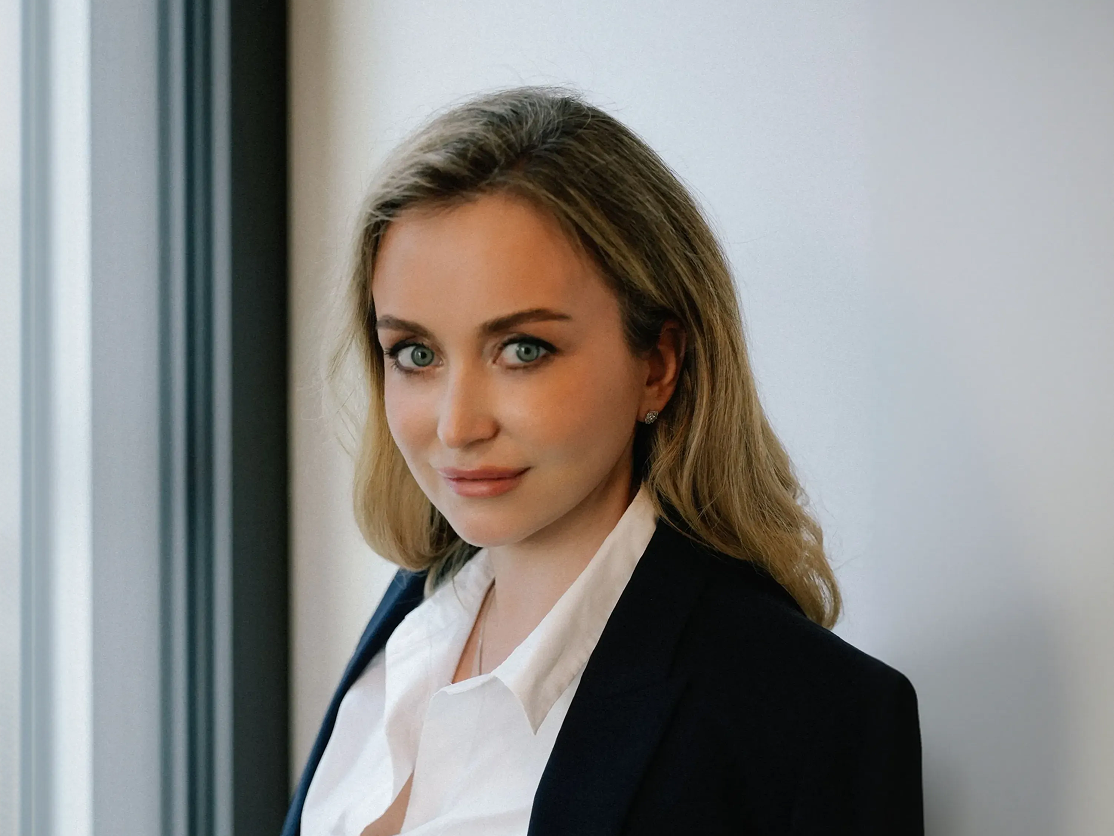
I've spent 12 years building partnerships between founders, technical teams, and the people who fund them. Somewhere along the way I noticed the same pattern over and over: brilliant fractional CTOs with real availability, and founders who had no idea they existed, let alone how to reach them.

Grand Rounds is my answer to that gap. The name comes from medicine, when a case is hard, doctors don't decide alone, they bring senior specialists around the table together. I built the same thing for technology.

"People need people. Nothing else works."

I'm the one who listens to your problem, asks the questions you didn't think to ask yourself, and figures out exactly which 2 or 3 people in my network have actually lived through it before.

Jane has been working across the industry since 2014, connecting startups, retailers, B2B companies, manufacturers, and expert teams around meaningful partnership opportunities.

Her experience includes building bridges between companies and ecosystems, ready-made technology solutions, manufacturing-focused initiatives, and sustainability-driven projects. Over the years, she has helped create practical collaboration models between businesses, technology providers, and industry experts.
For Jane, partnership strategy is not just part of the work - it is the DNA of her professional experience. Her focus is on identifying where teams, platforms, products, and industries can strengthen each other and turning those connections into real opportunities.

What founders say after their Grand Rounds session

It's like a hackathon for your real business problems. You bring your challenges and bright minds work on them - with no obligation, no pressure. I walked away with perspectives on investors, encryption solutions, and a connection that could directly benefit my product. Honestly, why rely on one mind, when you can have many?

Saif Alam
Saif Alam CEO at Keepsta

It was an incredibly welcoming space to connect with senior technical minds I wouldn't normally have access to as a non-technical founder. A fantastic opportunity to get real, honest answers to the challenges I was facing - and to walk away with meaningful connections who continue to support me.

Audrey Lee
Audrey Lee Founder of Lumi

CTO Grand Rounds was the best event by far. This is where the founder world and the tech world actually merge, with real introductions instead of leaving people to stay siloed. I was deep in a conversation about cybersecurity and feedback loops - practical advice I could act on immediately.

Hélène Le Roux
Hélène Le Roux CEO at Trippin'

What I valued most was the mix of CTO styles at the table - some all-in on AI, others more measured. As a founder, you don't want someone else's answer, you want enough perspectives to make your own call. I walked away with two strong contacts - people who hit the mark on build support, strategic fit, and investor credibility. The relaxed format made room for real technical conversation, not just quick decisions. Worth coming back for.

Hew Williams
Hew Williams Founder of Zeorb

What to write down about one AI action

Write down one proposed AI action before the conversation; that record makes the fit discussion specific.

Proposed AI action
One action and its destination
Authorizer
Who may authorize it
Evidence
What that person needs
Stop and escalation
Who can stop or escalate it
Workflow summary
Non-confidential
Failure examples
Representative ones
Known constraints
Data use and existing evaluation findings
Owners
Technical and operational

Mark unconfirmed authority explicitly. Do not send confidential case files or credentials through a public inquiry.

FAQ

Questions about AI governance consulting